
Can a Single Title Predict the Future of Medicine?
From "Brave New World" to the Bio-Digital Synthesis in Prenatal Care
Curiosity is the engine of research and innovation. For us at BioQXs , that engine is also sparked by meaningful coincidences.
In March 2026, we published our first blog article, "The Bio-Digital Synthesis: Brave New World," where I explored the intersection of biology and technology through the lens of Aldous Huxley’s 1932 vision [1]. Nearly 5 months later, I recently stumbled upon a 2013 MIT Technology Review titled "A Brave New World of Prenatal DNA Sequencing" [2]. This discovery prompted a deep dive into the last decade of medical progress, revealing a transformation, where Huxley’s anticipation has proven valid over and over again.
2013: The Era of Screening and "Test Tubes"
A decade ago, the landscape of prenatal diagnostics was defined by the clinical uptake of Noninvasive Prenatal Testing (NIPT) using cell-free DNA (cfDNA). At the time, this was a monumental breakthrough; it allowed clinicians to screen for chromosomal aneuploidies, such as Down syndrome, with a simple blood draw, significantly reducing the need for invasive and risky procedures like amniocentesis.
In our blog, I referred to this as a world of "test tubes and Soma", a period where we were just beginning to unlock the secrets hidden in maternal blood, but the scope remained relatively narrow, focused primarily on identifying specific genetic disorders.
2023: The Shift Toward Precision Medicine
Fast forward ten years, and the field has undergone a radical expansion. As highlighted in a comprehensive 2023 review in the Annual Review of Biomedical Data Science , we have moved from simple genetic "screening" to a holistic multi-omic approach [3].
Multimodal Omics: We no longer rely solely on DNA. Modern diagnostics leverage cfRNA, proteomics, metabolomics, and the microbiome to provide a high-resolution view of the health of both mother and baby.
From Reaction to Proaction: Perhaps the most significant development is our ability to predict complex "obstetrical syndromes" like preeclampsia and preterm birth . These conditions, which previously only offered emergency care options, can now be modeled longitudinally to allow for proactive, personalized intervention.
The Power of Incidental Findings: Modern genome-wide sequencing has reached such precision that it can now incidentally detect maternal cancer (occult malignancies) during routine prenatal checks, potentially saving the mother’s life alongside the child's.
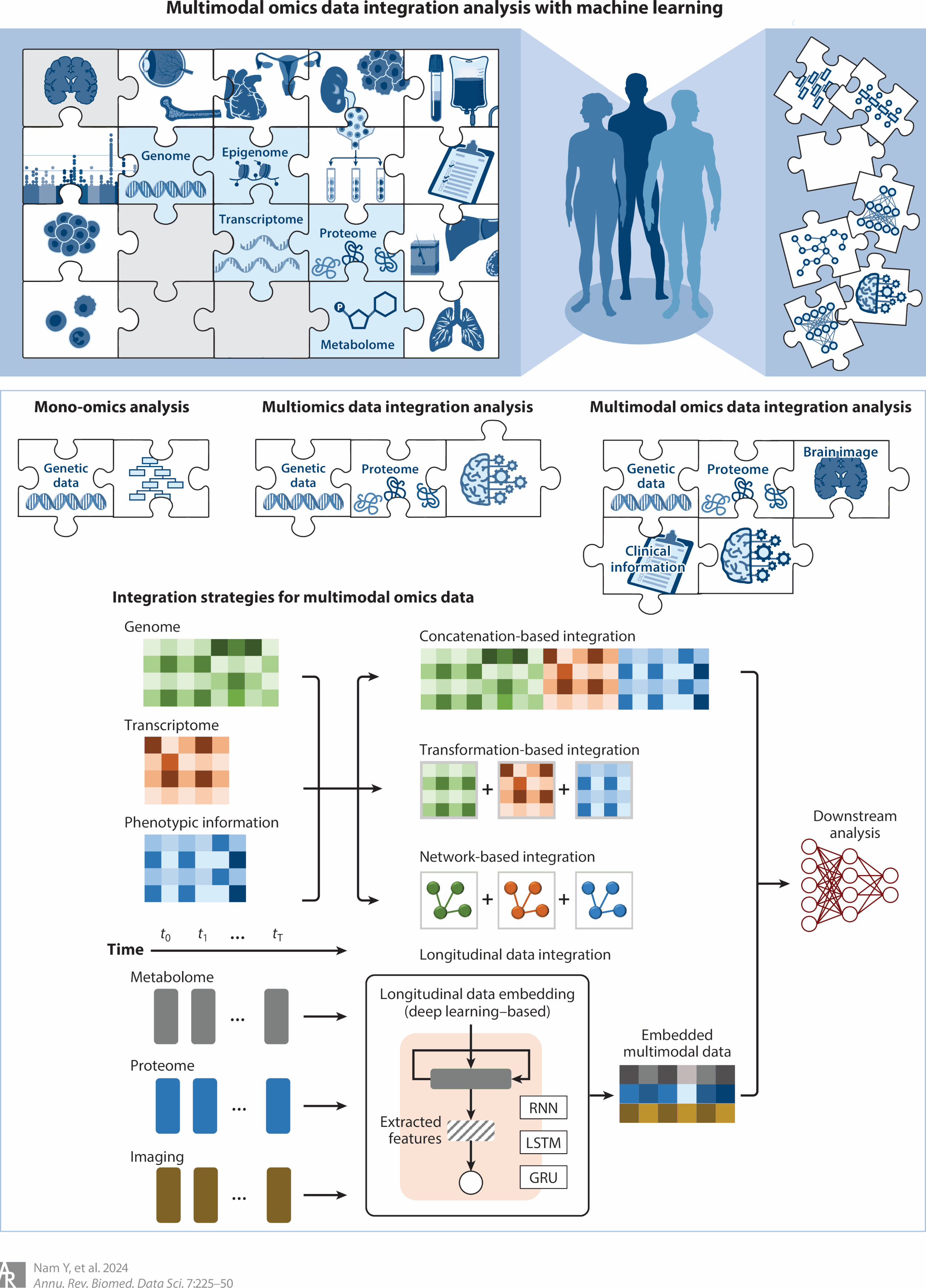
This figure illustrates the "digitalization" touch of modern medicine, showing the workflow from multi-omic biological samples to AI-driven clinical predictions, embodying the Bio-Digital Synthesis [4].
The Future: The Bio-Digital Synthesis
We are now at a definitive crossroad: The Bio-Digital Synthesis . This is the synergetic collaboration between the Biosciences, AI, and Sustainability.
The "Next Frontier" in prenatal care isn't just about collecting more data; it’s about the integration of that data through Artificial Intelligence to move from biomarker correlation to biological causation . This transition allows us to redefine disease taxonomy and pave the path for truly personalized medicine where "Function follows form".
The DNA of Innovation is Alive
At BioQXs , we believe that the DNA of innovation isn't just a digital script. It’s alive. It’s biological. Just like us.
The leap from 2013 to today is staggering. As we look toward the next decade, driven by the AI Revolution, we remain committed to providing research-backed guidance that prioritizes quality over haste. We aren't just reading the digital script of life; we are synthesizing a safer, more sustainable future for global healthcare.
Sources:
The Bio-Digital Synthesis: Brave New World. BioQXs . https://www.bioqxs.com/insights/the-bio-digital-synthesis
Rojahn, S. Y., A Brave New World of Prenatal DNA Sequencing. MIT Technology Review
Moufarrej, M. N., Bianchi, D. W., Shaw, G. M., Stevenson, D. K. & Quake, S. R. Noninvasive Prenatal Testing Using Circulating DNA and RNA: Advances, Challenges, and Possibilities. Annu. Rev. Biomed. Data Sci. 6, 397–418 (2023).
Nam, Y. et al. Harnessing Artificial Intelligence in Multimodal Omics Data Integration: Paving the Path for the Next Frontier in Precision Medicine. Annu. Rev. Biomed. Data Sci. 7, 225–250 (2024).
Explore more insights on our * BioQXs Insights * page or contact us to discuss how we can help navigate your next innovation challenge.